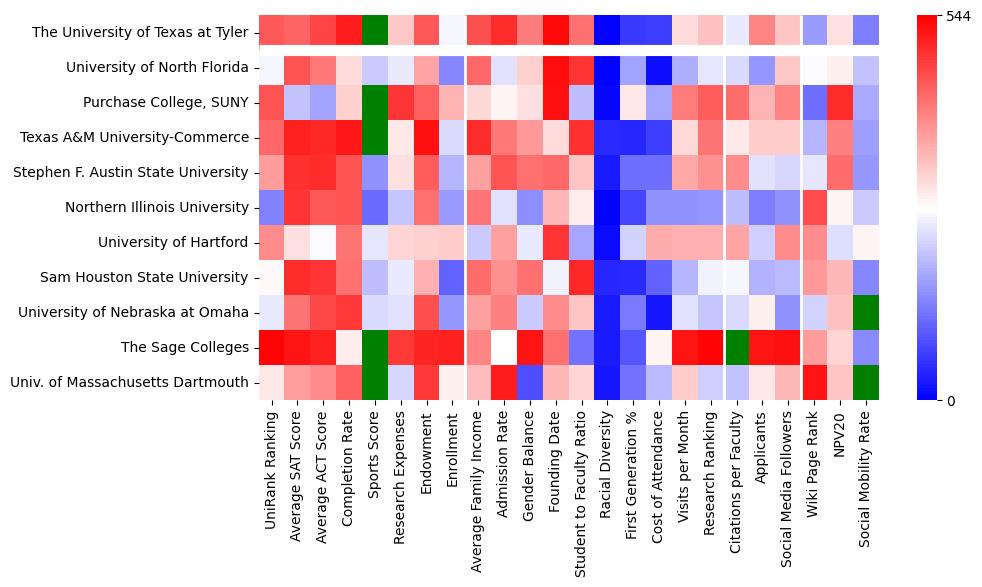
The University of Texas at Tyler (UT Tyler) was established in 1971 and has since grown into a respected institution within the University of Texas System. Nestled in the scenic Piney Woods of East Texas, the university offers a serene and picturesque environment for learning. Initially founded as Tyler State College, it became part of the University of Texas System in 1979. Over the decades, UT Tyler has expanded its academic offerings and infrastructure, evolving into a vibrant campus that serves over 10,000 students today. The institution is committed to providing accessible education to a diverse student body, with a focus on community engagement and regional development.
What sets UT Tyler apart is its strong emphasis on student success and personalized education. The university prides itself on its low student-to-faculty ratio, which facilitates personalized attention and mentoring opportunities. This approach has contributed to high student satisfaction rates and a supportive academic environment. Additionally, UT Tyler is known for its commitment to innovation and leadership, particularly in areas that impact the East Texas region. The university has established partnerships with local industries and organizations to provide students with real-world learning experiences and enhance local economic development.
Academically, UT Tyler offers a comprehensive range of undergraduate and graduate programs, with particular strengths in nursing, engineering, and business. The Ben and Maytee Fisch College of Pharmacy is recognized for its innovative Pharm.D. program, which emphasizes a student-centered, team-based learning approach. The College of Nursing and Health Sciences consistently ranks among the top nursing schools in Texas, thanks to its rigorous curriculum and excellent clinical training facilities. The university's engineering programs, housed within the College of Engineering, are noted for their focus on practical, hands-on experience and industry collaboration.
Despite its many strengths, UT Tyler faces challenges common to many regional universities. Some students have noted limited on-campus housing options, which can affect university life for those seeking a traditional residential college experience. Furthermore, while the university has made strides in expanding its research capabilities, it still lags behind larger institutions in terms of research funding and output. Nonetheless, UT Tyler is actively working to address these issues by investing in campus facilities and expanding its research initiatives to enhance the overall academic experience.